Colon Cancer Screening an Easy “Yes” for this Emergency Management Professional
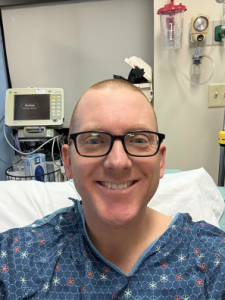 Ben Wooten spends his work days preparing for potential emergencies and anticipating safety risks. The 42-year-old Memorial Health vice president for Emergency Management and Safety takes that same approach with his own health.
“In my professional world, you always do a risk-based analysis,” he said. “What are you willing to risk in order to accomplish something? I don’t like going to the doctor. But the benefit of me starting to be more active in my own care with screenings means that I might be able to catch something early. Then I can hopefully mitigate that risk.”
Risk is something Ben knows well. He moved to central Illinois for work in 2025 from North Carolina where he volunteered as a firefighter for 18 years. Beyond the obvious dangers of fighting fires, exposure to fine smoke particles and toxic chemicals released from burning structures is a known cancer risk.
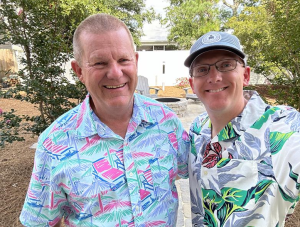 There is also a family history to consider. Ben’s dad, Dale Wooten, has dealt with Crohn’s disease since his mid-to-late 20s, although it is in remission now. Ben also has a cousin who has colon and upper GI health issues. He himself has endoscopies every several years due to chronic acid reflux since he was a teenager, which caused his esophagus to narrow due to scarring and led to difficulty swallowing.
When his primary care physician in North Carolina told him it was probably time to schedule a colonoscopy – even though he wasn’t the standard 45 years old yet – Ben made a note to do that after his relocation to Illinois.
“At work, protecting life is always the top concern,” he said. “You don’t know what you don’t know, which applies to this as well. Screenings are a top investigative tool and part of being prepared. No, the prep isn’t fun, but it is very doable.”
During his recent colon cancer screening, the gastroenterologist found and removed a polyp, which turned out to be benign. Ben is now on the five year plan for regular colonoscopies. And he’s good with that.
After all, he says: “Early screening is easy!”
If colorectal cancer, Crohn’s disease, ulcerative colitis or polyp syndromes run in your family, you may need a colonoscopy sooner than you think. A parent or sibling diagnosed with colorectal cancer could mean you should start screening as early as your 20s or 30s.
Early screening can catch precancerous polyps before they become life-threatening. Don’t let age be a reason to wait. Talk with your primary care physician about your family history and whether you should schedule a screening.
Don’t have a doctor? Find one here.