‘I Knew Something Wasn’t Right’ – How Fast Action Made the Difference for This Stroke Patient
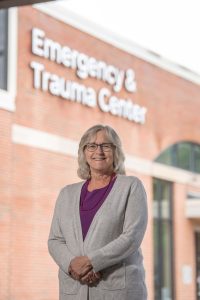 Mary Mizeur had just finished lunch at work when she noticed something was off. She tried to speak, but the words wouldn’t come out right. She laughed it off. Then it happened again.
“My heart was racing. It didn’t feel right. I knew what I wanted to say, but I couldn’t get a sentence out,” said the 61-year-old.
Trusting her instincts, Mary called her boss and asked for a ride to the Emergency Department at Springfield Memorial Hospital. They called an ambulance instead, and that quick decision made all the difference.
During the short ride, a paramedic prepared her for what was coming: a fast-paced room, a lot of people, a lot of tests. That heads-up helped calm her nerves.
“Thankfully, he really prepared me for what to expect,” she said. “Otherwise it would have freaked me out.”
Springfield Memorial Hospital recently earned recertification as an Advanced Comprehensive Stroke Center. This top-tier designation by The Joint Commission recognizes our capability to treat the most complex stroke cases, 24/7, with specialized neuro-endovascular care, advanced imaging and rapid response.
What this meant for Mary was that the stroke team was ready before she even came through the doors. Within 29 minutes of arrival, Mary received TNK, a clot-busting medication that restores blood flow to the brain.
Behind that speed is a coordinated effort that starts long before a patient reaches the treatment room. Stacy Schuette, RN, with Emergency Medical Services, knows firsthand how much every role matters in those critical minutes.
“Teamwork improves the process. You need a strong and present pharmacist, techs, other nurses and support staff that assist with lines, labs and monitor placement. The speed to get to the CT scan is dependent on all of this coming together,” she said.
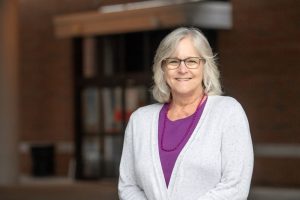 “I felt very well cared for,” Mary said. “If there was anything wrong, they would be on it right away.”
Mary was admitted to the ICU for monitoring. Her diagnosis was confirmed as a CVA (cerebrovascular accident), the clinical term for stroke. But by 10 p.m. that same night, her speech had returned to normal. She was discharged the next morning with no lasting neurological effects.
“It had scared me. But I felt very relieved.”
She has since followed up with a cardiologist, who placed a loop monitor to track her heart rhythm over the next three years. The experience reshaped how she thinks about her health.
“It told me I need to get healthy, eat better, exercise and not stress over work,” she said.
Her message to anyone who suspects something is wrong: don’t wait.
“I learned that day the importance of not putting it off. That medicine they give you is key, and if you catch it early, a lot of times you don’t have lasting symptoms. Don’t second-guess yourself.”
Learn More
The Advanced Comprehensive Stroke Center at Springfield Memorial Hospital brings together a specialized team, advanced technology and round-the-clock care to give patients the best possible outcome. Whether you are looking to understand stroke warning signs, explore your risk factors or find a provider, Memorial Health is here for you and your family.