Helping Hospital Patients Exercise Their Right to Vote
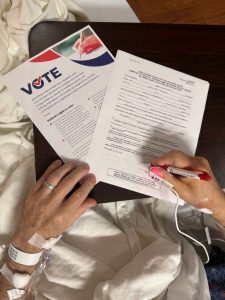 Being in the hospital on Election Day doesn’t necessarily mean a patient has to miss the opportunity to vote.
At Memorial Health, colleagues are prepared to help inform eligible hospitalized patients about how to navigate the process available under Illinois law. This is to ensure patients can cast their ballots while continuing to receive the care they need.
Illinois law provides a process for a qualified voter admitted to a hospital no more than 14 days before an election to have a vote-by-mail ballot delivered to the hospital by a legal family member or another registered voter from the patient’s precinct. The process requires documentation from the patient and a physician, advanced practice registered nurse or physician assistant.
For patients who unexpectedly find themselves hospitalized close to Election Day, knowing where to start can make a complicated situation easier to navigate.
The form outlines the steps patients and their families can follow, including completing the required form, obtaining the patient’s ballot through the County Clerk’s office and returning the completed ballot by 7 p.m. on Election Day.
Memorial Health colleagues remain nonpartisan throughout the process and do not make statements supporting or opposing candidates for public office.
“When someone is in the hospital, there are many things competing for their attention,” said Ginny Evans, director of hospitality and patient experience at Springfield Memorial Hospital. “We want to make sure patients who want to vote understand the process available to them and can exercise that right while still focusing on their health.”
John Elliott, 80, suffered a major heart attack the weekend before the election. After he was admitted to the hospital, he told his care team he needed to be discharged by Tuesday so he could vote. When that deadline was at risk, the team at SMH helped make voting happen for the Springfield resident.
“Voting is so important,” he said. “It means everything that they were willing to help make it happen. The patient experience representatives were wonderful, and my RN tracked down my physician for the signature we needed.”
The effort reflects Memorial’s commitment to recognize the whole person in patient care, which includes helping patients remain connected to the parts of everyday life that matter to them.
Helping an eligible patient understand how to vote from the hospital is one example of how Memorial Health colleagues can support patients as people, not just as patients.
“Our patients don’t stop being members of their communities when they enter the hospital,” Evans said. “Helping them understand the resources available is part of treating each person with dignity and respect.”