Lung Cancer Screening and Diagnosis: Three Steps That Could Make a Difference
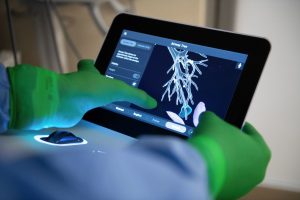 When it comes to lung cancer, finding an issue early can make a big difference. But screening is just one piece of the puzzle. If a scan reveals a suspicious spot or lung nodule, patients need access to specialists who can determine what comes next and, when necessary, provide a biopsy to help make a diagnosis.
In Springfield, a partnership between Springfield Memorial Hospital, Memorial Lung Care and SIU Medicine is bringing those pieces together. SIU Medicine physicians provide specialty expertise; Memorial Lung Care operates from the Memorial Wellness Center and Simmons Cancer Institute; and procedures are performed at Springfield Memorial Hospital.
One of the newer tools available for patients is robotic bronchoscopy, a minimally invasive procedure that allows physicians to biopsy areas deep within the lungs that can be difficult to reach using traditional methods.
The recently established Amy Keil Schmidt Early Lung Cancer Detection Program has helped expand access to advanced diagnostic technology for patients in Illinois. The program helped fund a new robotic bronchoscopy system and honors Schmidt, who died from lung cancer after becoming a passionate advocate for early detection following her diagnosis.
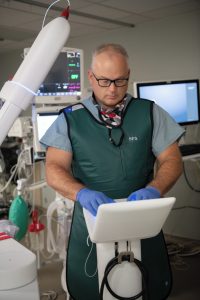 “This technology gives us the opportunity to diagnose lung cancers at an earlier stage with fewer complications,” said Traves Crabtree, MD, a cardiothoracic surgeon with SIU Medicine. “We can treat cancers earlier, which improves long-term survival.”
Since the robotic bronchoscopy equipment was introduced at Springfield Memorial Hospital, the team has performed more than 500 procedures.
“This safer, minimally invasive technology allows me to reach small or hard-to-access nodules with greater precision,” said Taylor Stone, MD, a critical care and pulmonology physician with SIU Medicine. “The result is more timely care, better treatment options and improved outcomes for patients close to home.”
Take Charge of Your Lung Health
- Determine whether you may be at higher risk. Start with a conversation with your healthcare provider about your personal risk factors and whether lung cancer screening may be right for you. Smoking history is a key factor in determining eligibility for routine screening.
- Talk with your provider about screening. For eligible patients, lung cancer screening with low-dose CT can identify abnormalities that may need a closer look. If imaging reveals a lung nodule that may require a biopsy, your physician can refer you to Memorial Lung Care to discuss whether robotic bronchoscopy is appropriate.
- Know that a biopsy doesn’t always mean a major procedure. For some patients, the idea of having a lung biopsy may sound intimidating. Robotic bronchoscopy offers another option. The procedure takes around an hour under anesthesia, and most patients can return home the same day. Patients generally recover and return to their normal routines sooner than they would after a more invasive procedure.
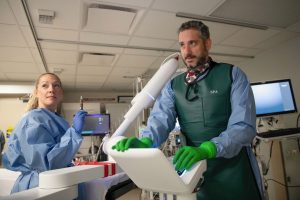 Remember, technology alone doesn’t provide care. People do. That’s where the partnership behind Springfield’s lung care program comes in. Together, the teams provide a more connected path from identifying a concern to investigating it and determining what should happen next.
The goal of screening and advanced diagnostic technology is to identify potential problems earlier and give patients and their physicians the information they need to make informed decisions. If you’re concerned about your lung health or aren’t sure whether screening is appropriate for you, start by talking with your primary care provider.
Interested in learning more? Contact your primary care physician to discuss lung screening options. Need to find a doctor? Visit memorial.health for a list of our primary care physicians accepting new patients.